Report: 'Spread of rioting helped by TV images of police'
Report by Riots Communities and Victims Panel publishes findings, claiming that 'social media and broadcast news services conveyed a loss of control of the streets'
– 3 min read


Report by Riots Communities and Victims Panel publishes findings, claiming that 'social media and broadcast news services conveyed a loss of control of the streets'
This article was migrated from an old version of our website in 2025. As a result, it might have some low-quality images or non-functioning links - if there's any issues you'd like to see fixed, get in touch with us at info@journalism.co.uk.
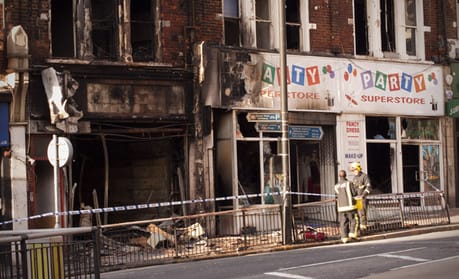
A panel set up by the prime minister following the riots in August last year has claimed that "the spread of rioting was helped both by televised images of police watching people cause damage" and the use of social media "to bring together determined people".
The Riots Communities and Victims Panel was announced by the deputy prime minister in 2011, and tasked with looking into a number of issues, including, "why the riots happened in some areas and not others" and "what could have been done differently to prevent or manage the riots".
It also investigated "what motivated local people to come together to resist riots in their area or to clean up after riots had taken place", with its findings following visits to 21 areas and listening to the "views of communities and victims". In its interim report, officially published today , one aspect addressed by the panel was media coverage of the riots and the use of social media.
The panel reported that "images of police being seen to ‘back off' in Tottenham and their rapid circulation across social media and broadcast news services conveyed a loss of control of the streets". In an executive summary the panel added that "this combined with a febrile rumour environment created a unprecedented explosive cocktail".
"It began to build a perception (and ultimate reality) that the street was no longer defended or defensible once resources were split."
The panel reports that some respondents "felt broadcasts showing scenes of one riot while reporting on another was misleading, especially as images sometimes depicted riots that had already been dealt with and had stopped".
"People felt this served to make rioting a self-fulfilling prophecy, attracting looters to areas they believed were already seeing significant rioting".
The panel added: "It seems clear that the spread of rioting was helped both by televised images of police watching people cause damage and looting at will, and by the ability of social media to bring together determined people to act collectively."
While the panel acknowledged that "freedom of the press is an essential principle", it added that "in some instances, news coverage of the riots provided information which could be used by the rioters against ordinary citizens".
"In other cases, the prospect of media coverage was an added attraction for rioters, an appealing prospect of '15 minutes of fame'."
In its recommendations the panel said it does "appreciate the challenges around reporting of large scale, fast moving, public disorder events", but added that "it is essential that TV reports are accurate and that the link between the issue being reported and the accompanying images is clear".
"The reach of the media provides a useful channel to reach affected citizens. Public services should work with the media to better harness this opportunity during any future disorder."
Coverage by local and regional news outlets was "commended" by many respondents, the panel added, "for their coverage of the riots, the clean ups and their efforts to support police investigations to bring rioters to justice".
Following the rioting in August prime minister David Cameron announced that bans were being considered by the government for people thought to be using social media to organise rioting.
"Everyone watching these horrific actions will be struck by how they were organised via social media. Free flow of information can be used for good. But it can also be used for ill. And when people are using social media for violence we need to stop them" Cameron said at the time.
But the panel added that the government should not "simply shut down social networks in the event of rioting".
"Social media was also used by family members, community groups and authorities to dissuade people from going out onto the streets and to provide reassurance to communities.
"...What is clear from the riots is that there is no simple 'switch off' solution to the use of social media. Viral silence may have as many dangers as viral noise."
The report was officially published today, but the panel released a statement from chair Darra Singh on Tuesday which said a "near final version" of the report had been leaked and obtained by Sky News .
"Our remit was to give a voice to the communities and victims of the August riots. This leak may have impacted on our ability to ensure they receive the widest possible audience."