The Independent's Beth Gordon: 'What Spotify's revolution taught me about saving journalism'
A former Spotify marketing director says the music and news industry have both gone through digital disruption with subscriptions coming out as a solution. A second digital disruption of AI puts a premium on authenticity and human connection
I remember the days of buying a music CD, burning it onto my iTunes library and importing it onto my iPod. I was also one of the very early adopters of Spotify, the music streaming service, in the early 2010s. It first came to the UK through an invite-only code from your friends and family, for you to then refer to others. It felt like a game-changer, and it exploded in popularity in the decade that followed. The platform now claims to have nearly 700m monthly active users.
The convenience of streaming only partly explains why physical music sales have been in a long-term downward trend. Piracy has a lot to do with it, too. The trend appears to be stabilising, as the UK recently saw a five per cent increase in music sales for the first time in two decades. The superfan item - the vinyl - saw a bigger increase of around 12 per cent.
News has gone through a similar transformation from analogue to digital. In the UK, print consumption has fallen from 59 per cent to 12 per cent in the last 12 years, according to the last Reuters Institute Digital News Report 2025. Subscriptions have similarly emerged as a lifeline, but they appear to be hitting a ceiling. Like music, other revenue streams - particularly the live sector - have become vital.
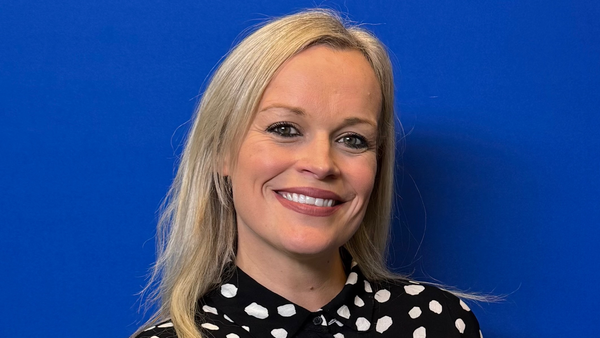
Enter Beth Gordon, The Independent's director of brand marketing and communications. She's a rarity who has spent her career in both the news and the music industry, including five years at Spotify during its pivotal launch in the UK as the director of business marketing.
She spoke to Journalism UK about the parallels between news and music, and the shared challenges with the arrival of AI.
Lessons from Spotify on building your champions
As the first business marketing employee during Spotify's move into the UK market, Gordon was tasked with more than just introducing a new product. She had to help shift the entire mindset of how people engaged with music.
"It wasn’t just about selling a brand,” Gordon recalls. "It was about getting people to understand a whole new way of listening—streaming rather than owning."
The early strategy was highly relationship-driven. While sophisticated product testing was happening in Stockholm, Gordon’s focus was on grassroots advocacy: building connections with agencies, high-profile early adopters, and essentially, ambassadors.
"We’d literally go to people’s houses, show them how to use Spotify, and hand out codes for a month’s trial," she says. The goal was to create excitement and a sense of wonder, encouraging users to fall in love with the product and share it with their networks. This approach, she notes, was crucial in overcoming initial scepticism and building the foundation for Spotify’s rapid growth in the UK.
Piracy was a major force in Sweden at the time, but Spotify’s model offered a legal, creative alternative that benefited both listeners and the music industry. In the words of Gabe Newell, a legendary video game developer (an industry also reckoning with piracy): "One thing that we have learned is that piracy is not a pricing issue. It’s a service issue.
"The easiest way to stop piracy is not by putting anti-piracy technology to work. It’s by giving those people a service that’s better than what they’re receiving from the pirates."
Anyone who has dared to use a music pirating software Limewire or Napster, will tell you how awful the experience is. Putting aside the risks to your family computer, the audio quality was inconsistent. Spotify achieved its success through technological innovation and a culture ready for change, according to Gordon.
Digital disruption: where music and news overlap
The music industry’s digital transformation was defined by its battle with piracy, while the news industry has grappled more with - to name a few - issues of distrust, news avoidance and information overload. These issues often intermingle.
Gordon notes that both sectors have had to adapt to the rise of aggregators - Spotify for music, Google for news - raising questions about content value and the sustainability of creative work.
"People want everything for free, without ads, and for creators to be paid fairly. But that’s just not possible," she says. For musicians, this has meant diversifying revenue streams beyond record sales to include touring, merchandise, brand deals, and even teaching or crowdfunding. For news, it’s been about expanding beyond traditional ad revenue to licensing, syndication, reader revenue, and international growth.
Subscription models, once viewed with scepticism, are now seen as a viable solution in both industries. Yet both music and news now face a new, shared challenge: the rise of AI.
Gordon points out that AI threatens to undercut authenticity and business models in both sectors. In music, AI-generated tracks can replace the work of real musicians; in news, AI can flood the market with low-quality content, making it harder for audiences to find trustworthy journalism. Music stars have not been shy about hitting out against AI and where the government needs to act.
"People can see through inauthenticity," she says. "AI will never replicate the passion and skill of real people."
Stage time in the newsroom
So why trade music for news? Gordon’s journey from Spotify to The Independent has been shaped by a belief in the power of creativity and positive change.
"Our audience wants to make change happen—and they love music,” she says. The national news organisation reaches a core music audience of 7.9 million, outperforming many specialist titles. Its readers are 11 per cent more likely to be music fans than rival titles The Guardian, The Telegraph and The Times.
Its music coverage is intentionally broad and democratic, championing all genres and supporting the full spectrum of the music ecosystem. Its Music Box series, led by music editor Roison O'Connor, gives new musicians a platform to reach a wide audience within the newsroom. Past participants include Bastille, Lewis Capaldi and Olivia Dean.
Meanwhile, the Mainstage programme, in partnership with Music Venues Trust, spotlights grassroots venues across the UK, providing editorial support and free advertising to help them survive and thrive. It's crucial in the backdrop of the vast decline of music venues, which are a critical pipeline of talent for the industry.
“It breaks my heart when I see music venues close and when I think about how much of my youth was spent in tiny, smelly venues in Leicester."
The goal is to work with brands that share a commitment to live music and community impact.