User needs, monologues and optimisation: How LBC cracked the YouTube code
Global's outgoing head of SEO and editorial product Steve Wilson-Beales shares inside tips on playlists, tags, thumbnails and more

– 3 min read


Global's outgoing head of SEO and editorial product Steve Wilson-Beales shares inside tips on playlists, tags, thumbnails and more
This article was migrated from an old version of our website in 2025. As a result, it might have some low-quality images or non-functioning links - if there's any issues you'd like to see fixed, get in touch with us at info@journalism.co.uk.
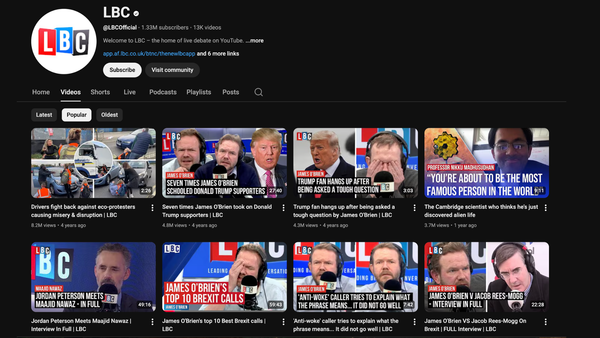
"A face for radio" is an old newsroom insult meaning one is better heard than seen. So when LBC revamped its studios in 2017, it not only made a strategic leap into “visualised radio” via YouTube, but killed the expression in one fell swoop.
By putting its presenters on camera, LBC modernised its brand in the age of social media and sent its reach soaring. There are few better examples than radio presenter James O'Brien, whose monologues and bust-ups with callers have attracted views in the millions.
YouTube is itself a strong monetisation play for newsrooms and a cheaper option than building your own video player infrastructure. It's also a big draw for news audiences. The Reuters Digital News Report 2025 found that 21 per cent of audiences use YouTube for news weekly. Although that number has dipped slightly in the last year, it's gaining popularity in the Global South.
But the advantage of having a dedicated YouTube strategy extends into visibility across Google, including in Google Discover and AI Overviews, making it a valuable asset for the digital growth of news websites as a whole.
At the News and Editorial SEO Summit 2025 yesterday (22 October 2025), Steve Wilson-Beales distilled LBC’s journey to 1.3m subscribers and top growth lessons, having just left the role as head of SEO and editorial product for the parent company, Global. The message is clear: the devil is in the details.
The big media trend of the moment is the user needs model, the framework that details how audiences have 8 total core needs when consuming news coverage. An audit of LBC coverage highlighted the classic mistake most newsrooms make: it was doing too many classic update news articles, and not enough stories catering for other needs.
We tend to think about user needs within text journalism, but it lends itself to video and audio content, too. Better still, there are plenty of established video formats that naturally support user needs: explainers (give me perspective), Q&As (connect me), how-to guides (help me) and so on.
New to the user needs model? Learn more
1. Video headlines and titles
2. Thumbnails
3. Playlists
4. Tags, descriptions, and keyword research
5. Captions and transcripts
6. End cards (end screens)
7. Shorts
8. Long form vs. short form video
9. Testing and auditing
Invest in strategy and focus relentlessly on audience needs is the parting wisdom from Wilson-Beales. Focus not just on views and subscribers, but building a loyal, engaged audience and boosting your brand’s presence across the entire Google ecosystem. It's what your true competition will be doing.
"You’re not really competing with other news brands. You’re competing with creators who have cracked the algorithm," he concludes.
This article was drafted with the help of an AI assistant before it was edited by a human