What AI agents need from journalism: an explainer
Your next reader may be an AI agent that reads every line, checks every byline and decides in milliseconds whether your story makes the cut. Here is what it looks for

– 5 min read


Your next reader may be an AI agent that reads every line, checks every byline and decides in milliseconds whether your story makes the cut. Here is what it looks for

For years, newsrooms have asked what readers need from a story. Now there is a second question: what does an AI agent need from it? Agents are already retrieving, comparing and acting on journalism on people's behalf, and they judge content very differently from humans. Here is how it works, and why it matters.
Speaking at Digital Media Europe, Ezra Eeman, director of AI in media at WAN-IFRA, explains that AI assistants have become routine. A Gracenote study found that 66 per cent of people across all generations said their use of AI chatbots had increased over the past year or so. Among 25- to 34-year-olds, 80 per cent use them daily or several times a week. ChatGPT handles roughly 2.5 billion queries a day, and one estimate puts Google's AI Overviews at around 8 billion daily responses.
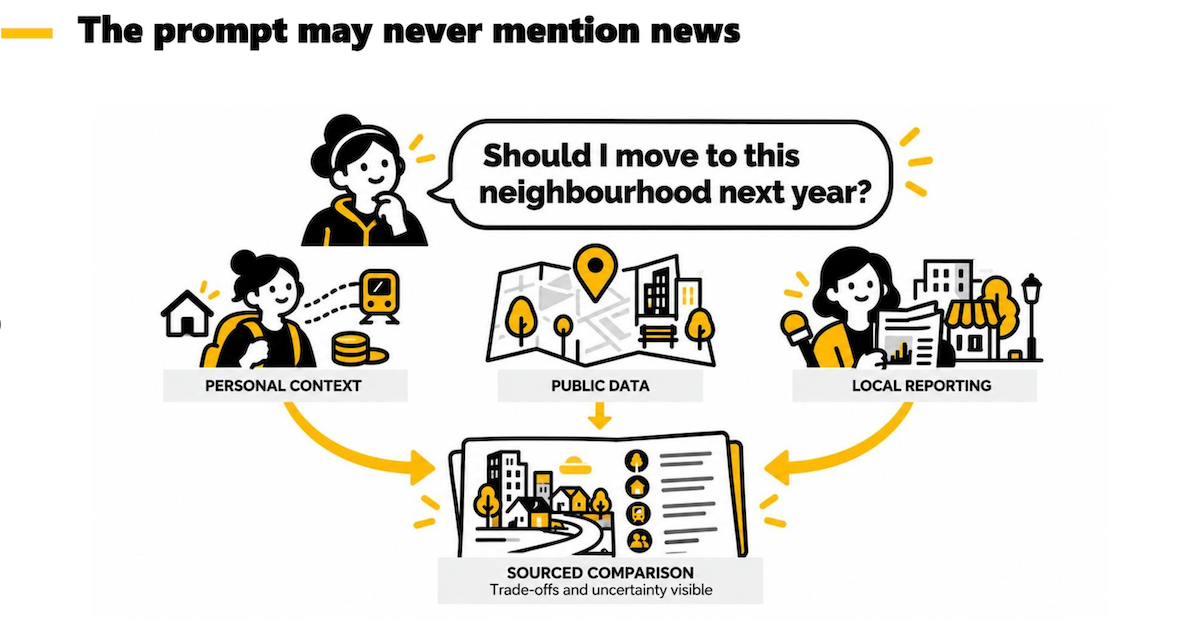
Yet very little of that traffic is explicitly about news. Fewer than four per cent of ChatGPT queries are about current events. Most people want help with tasks: planning a day, comparing options, getting advice.
Journalism still features heavily in the answers. Similarweb analysis shows news publishers account for about a third of citations in AI answers, and most of the cited material is less than a year old. Someone asking about a local area they consider moving to receives an answer that draws on local reporting, public data and the person's commute. Journalism increasingly serves a need inside a larger task.