What can you do to help street papers survive?
Street papers like The Big Issue have long provided income for people affected by homelessness. From content sharing to mentoring, this is how you can help these essential publications thrive
Those of you in the UK will have no doubt seen the Big Issue being sold on the high street. The magazine was founded 30 years ago as a pioneer of the vendor model, where people who have experienced poverty and homelessness sell the cover title at a profit.
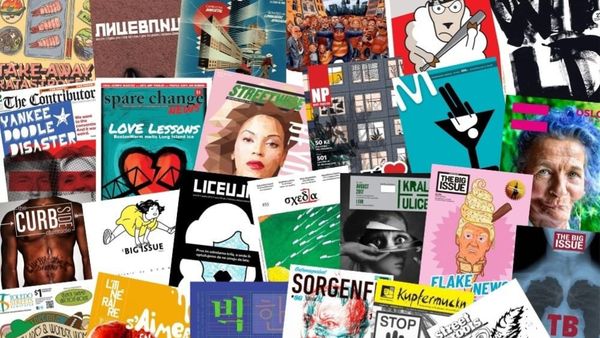
The Big Issue is a founding member of The International Network of Street Papers (INSP), now comprising 92 member street papers across 35 countries. Dope Magazine is a more recent street paper that was formed in 2024. The Network has papers in all corners of the globe: South Africa, Australia, Peru, North Macedonia.
But the street paper model has become quite stressed in recent years, mirroring – and oftentimes magnifying – broader media challenges:
Print in decline
Street papers depend on print sales and high footfall in urban areas. The pandemic has had a profound impact on both social interactions and the decline of the high street. This has made it even harder for vendors to reach customers, reflected in declining print sales.
Each INSP member is a separate social enterprise, responsible for generating its own income. Traditional revenue streams like print sales and advertising are under pressure, pushing organisations to experiment with new models — such as selling merchandise or, in the case of Norway's largest street paper =Oslo, training vendors as baristas to run coffee shops to help shift copies and earn additional income.
Press freedom barriers
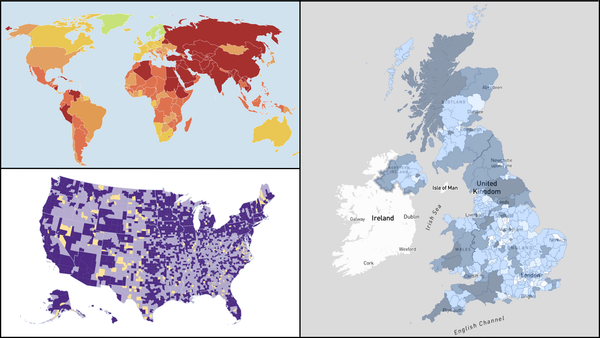
Where vendors operate around the world – and where they are absent – has a lot to do with press freedom and political regime. As the map below shows, street papers are absent in Africa (except for South Africa), most of Asia and the Middle East.

The network is run on an application basis, so it only exists where there is demand and safe opportunities for the vendor model. Restrictive environments make it impossible for street papers to operate safely or at all, as they can be seen as easy press targets.
Representation and lived experience
A further challenge is ensuring that the voices of those experiencing homelessness and poverty are authentically represented in the media.
The UK news sector is dominated by elite, middle-class people, with only around nine per cent of journalists in top positions coming from working-class backgrounds.
This lack of representation, combined with persistent stigma and even 'poverty romanticisation' in coverage, means many stories go untold or misunderstood.
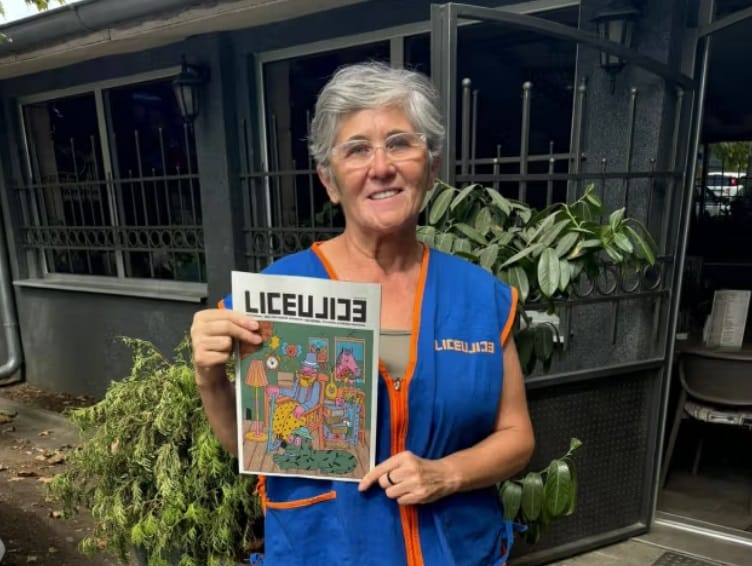
INSP set up the "Changing the Narrative" academy in response, training people with lived experience to write their own stories and contribute directly to street papers. Anecdotally, Mike Findlay-Agnew, chief executive of INSP, says that readers are more open to buying copies of the title when they know vendors have had a hand in the coverage.
A lot of our members in the US encourage vendors to write for the street paper and actually what vendors find is if they're stood in a street corner and saying 'buy this street paper I’m actually featured in it' that they tend to get more sales.

Over a 10-week intensive programme, participants attended five afternoon workshops covering the fundamentals of media, news types, trust and bias, and the craft of headlines and hooks. Each participant completed written assignments and received one-to-one support, balancing encouragement with challenge.
A highlight of the academy was a "meet the journalists" panel, where participants engaged with senior industry professionals and a representative from Glasgow Clyde College. One participant managed to land a place on a journalism qualification course through the initiative.
In total, 15 participants completed the project, earning certificates of attendance and achievement from INSP. Their stories were published both through INSP's global news service and in a newly formed newspaper, The New Narrative. The project is now weighing up a second phase.

INSP has developed media partnerships over the years to help. That's where you come in.
One of its most significant partnerships is with the global news agency Reuters. Through the Reuters Connect platform, INSP members receive free access to Reuters images, which are a vital resource for street papers whose mission is to tackle homelessness and poverty.

It means that its global members can access high-quality images at no cost, supporting their editorial work and charitable aims.
INSP is actively seeking new forms of industry collaboration. Here’s how your newsroom or organisation can make a tangible difference:
INSP’s collaborative ambitions are gaining traction at the highest levels.
At a recent Westminster event, hosted with the support of MPs including Martin Rhodes (Glasgow North) and Chris Kane (Stirling and Strathallan), INSP made the case for greater industry and political support from central government.
The event brought together political leaders, media organisations, and funders to discuss how to amplify the voices of street papers and their vendors.
"There’s something bigger picture-wise, particularly from a UK perspective, about leveraging political leaders, decision makers, charitable organisations and media organisations to get more lived experience represented," says Findlay-Agnew.
The Westminster event is just the start. INSP is keen to build on these conversations, forge new partnerships and secure the resources needed to sustain its work.
We used an AI assistant to help structure and draft this article, before it was edited by a human