What the news community says about Zuck’s plans to bin fact-checking
Meta landed a Zuckerpunch to the media industry by ending Facebook and Instagram fact-checking ahead of the Trump administration

– 2 min read


Meta landed a Zuckerpunch to the media industry by ending Facebook and Instagram fact-checking ahead of the Trump administration
This article was migrated from an old version of our website in 2025. As a result, it might have some low-quality images or non-functioning links - if there's any issues you'd like to see fixed, get in touch with us at info@journalism.co.uk.
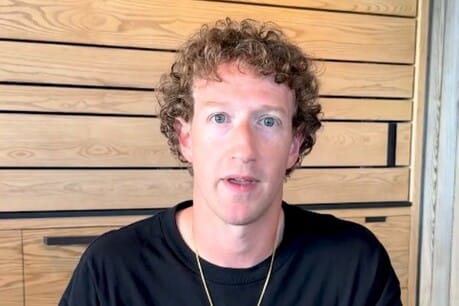
Mark Zuckerberg’s announcement that Meta will stop working with third-party fact-checking organisations has gone viral in seconds. The move is intended to reverse the company’s content moderation approach that, according to Zuck, has too often resulted in “censorship.”
Sporting a $900,000 watch, the Meta CEO said in the video: "After Trump first got elected in 2016, the legacy media wrote nonstop about how misinformation was a threat to democracy. We tried in good faith to address those concerns without becoming the arbiters of truth," Zuckerberg said. "But the fact-checkers have just been too politically biased and have destroyed more trust than they've created, especially in the US"
Predictably, the socials went ablaze and many experts and insiders spoke out.
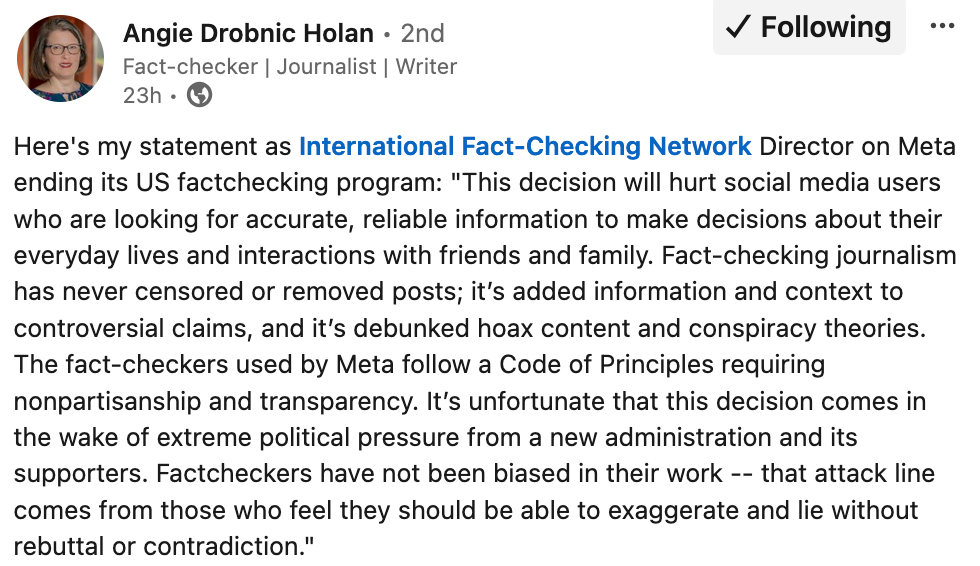
And speaking of fact-checking, it was about time someone fact-checks Zuck's claims about fact-checkers being horrible, censorship-hungry beasts. Thank you, Professor Rasmus Kleis Nielsen, former director of the Reuters Institute for the Study of Journalism.
Tweet content
— User View on Twitter
James Ball, political editor at The New European and former Guardian journalist, pointed out that it is not only about the end of fact-checking but also about the freedom to talk about topics that could harm vulnerable groups.
Tweet content
— User View on Twitter
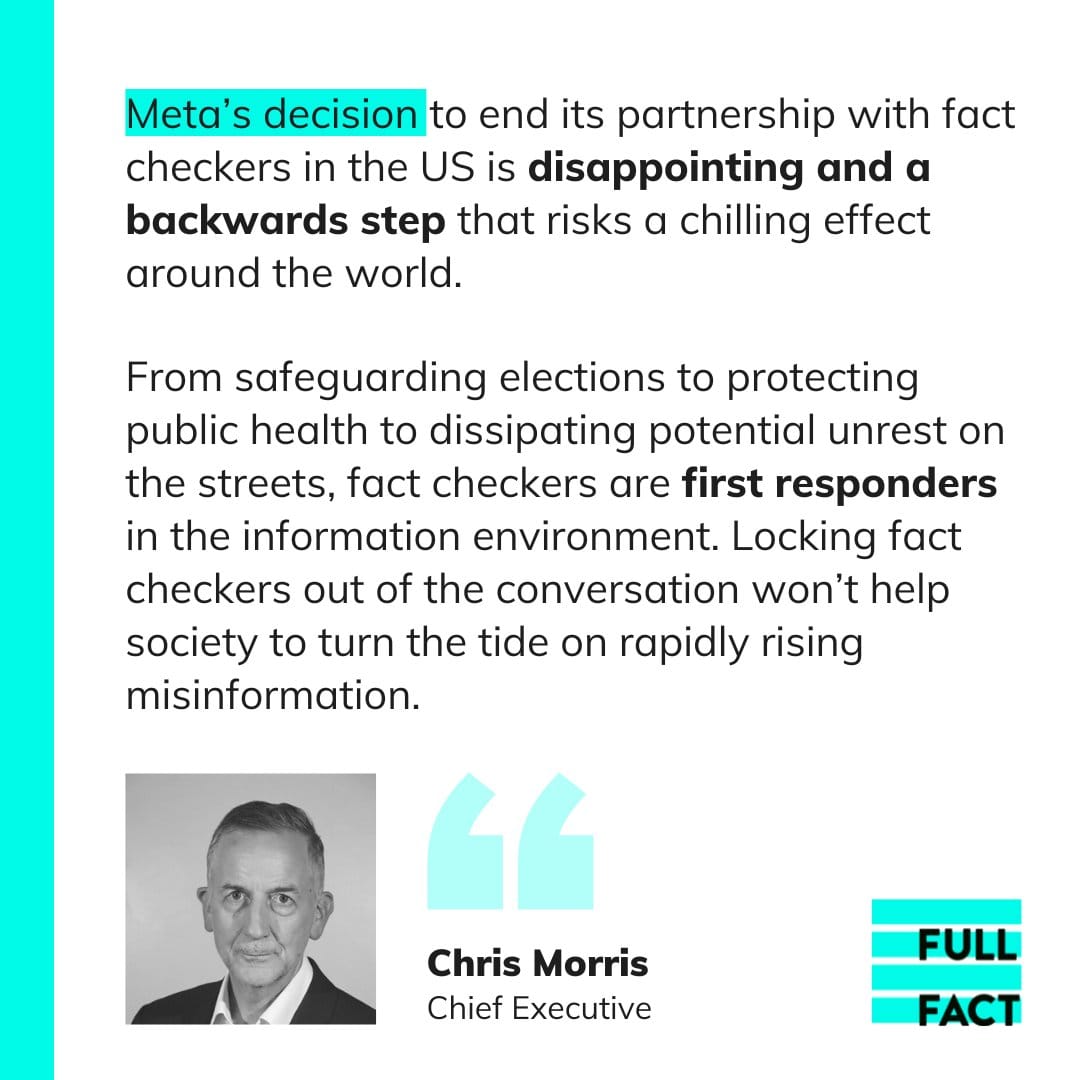
Fact-checking organisation Full Fact also weighted in.
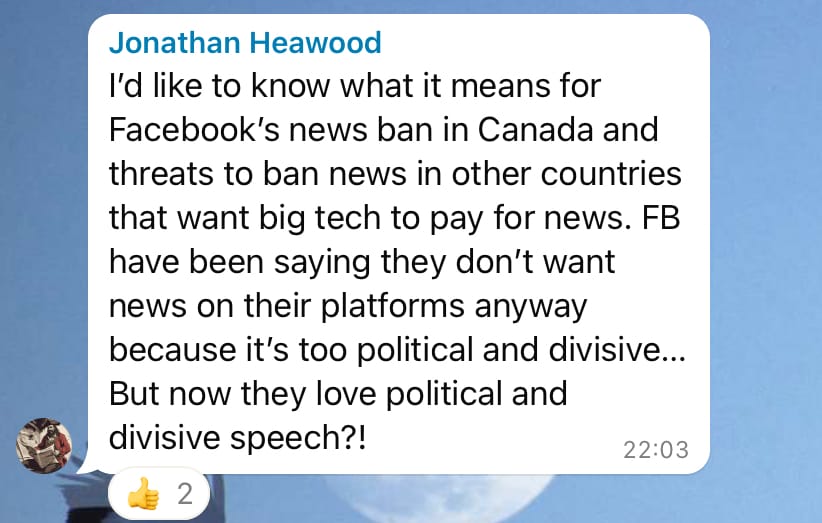
For Jonathan Heawood, executive editor of the Public Interest News Foundation, Zuck's announcement raised more questions than answers.
Journalist and content creator Sophia Smith Galer questioned why fact-checking is seen as a left-wing concept, when the data shows right-wing voters are more likely to share false or inaccurate information.
TikTok TikTok Video
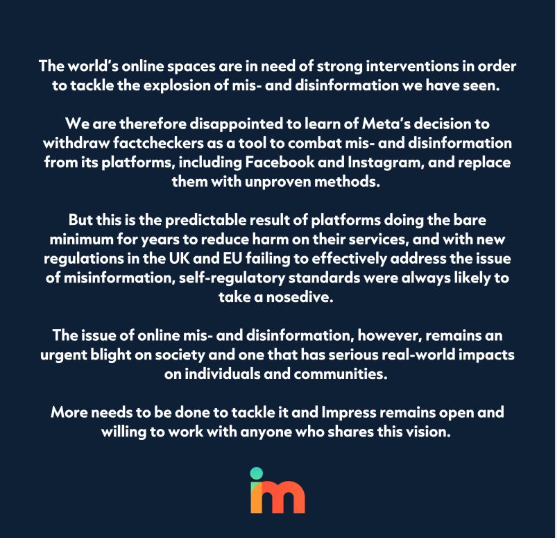
Independent press regulator IMPRESS says Meta's decision is a result of ineffective UK and EU legislation.
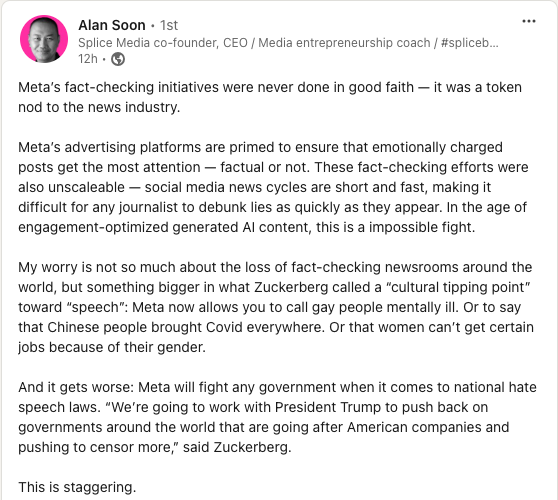
Splice Media co-founder and CEO Alan Soon says that Meta's decision has now made an "impossible fight" to debunk misinformation even harder by allying with the Trump administration.
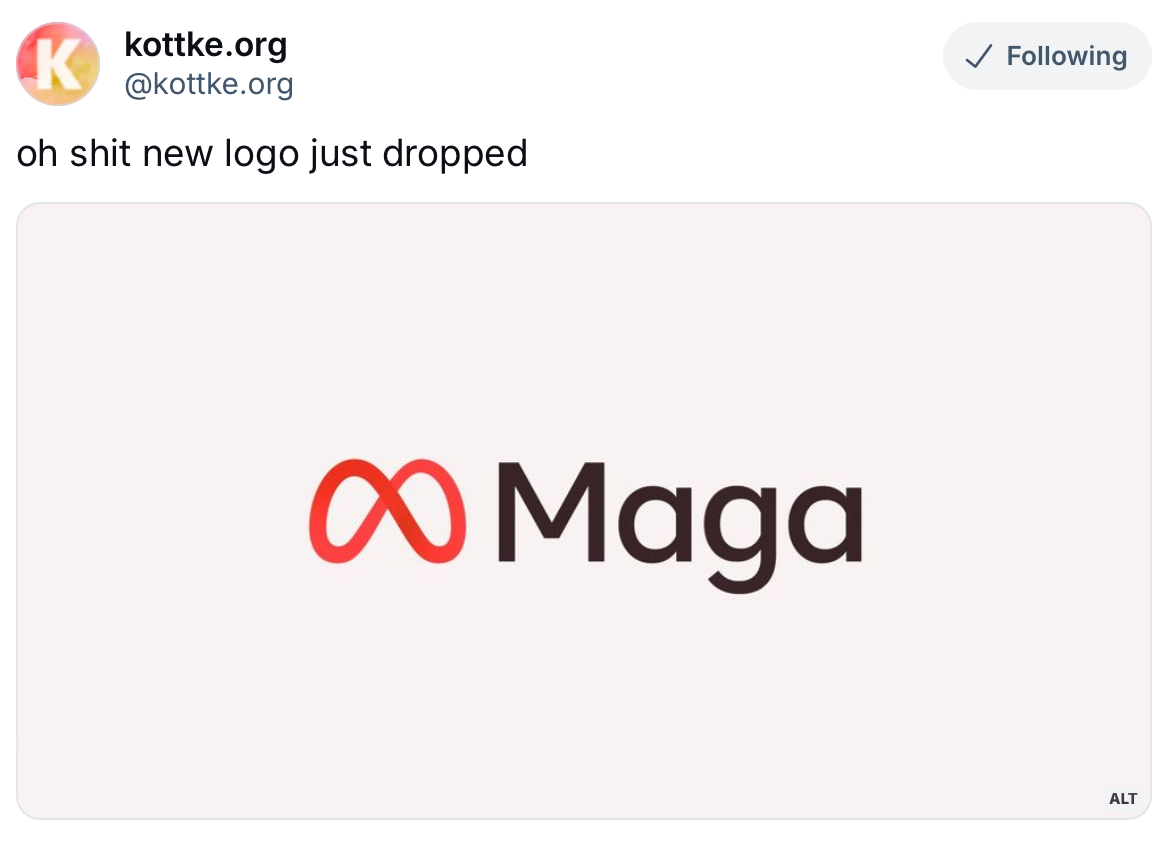
And we will just leave this here, courtesy of blogger Jason Kottke.