Key trends news publishers will see in 2014
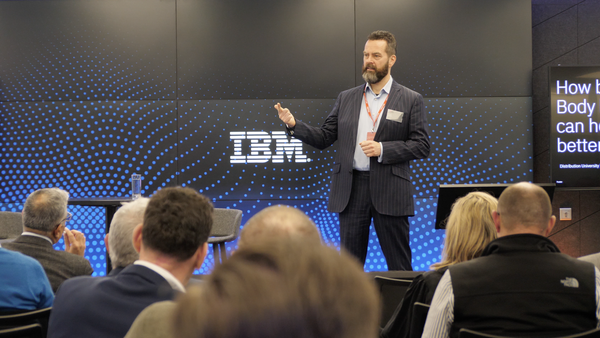
Ken Doctor, author of Newsonomics, shares his predictions at the World Publishing Expo
– 2 min read


Ken Doctor, author of Newsonomics, shares his predictions at the World Publishing Expo

This article was migrated from an old version of our website in 2025. As a result, it might have some low-quality images or non-functioning links - if there's any issues you'd like to see fixed, get in touch with us at info@journalism.co.uk.
The World Publishing Expo 2013 got underway with a number of key trends news publishers can expect to see going into 2014. Ken Doctor , author of Newsonomics and a regular writer on Nieman Journalism Lab , did some crystal ball gazing, and delivered his predictions for next year:
The total newspaper revenue lost globally in the last six years stands at 39 per cent, Doctor said, which equates to $51 billion of lost revenues a year.
Doctor used the example of Amazon founder Jeff Bezos, who paid a reported $250 million for the Washington Post, and sees "the future and not the past", Doctor said.
"[Bezos] sees an enduring brand, a massive metro penetration, hundreds of thousands of paying customers, and a rich trove of largely untapped data."
"He’s going to try and please readers," Doctor added.
The next generation of paywalls will be implemented, Doctor predicts. "From the Times, we’ll soon see a spate of new products, individually priced and targeted at niche audiences, Doctor reports in this article (something Journalism.co.uk has also reported on). At today's conference Doctor said Mark Thompson, chief executive of the New York Times, has described this strategies as "working the engagement curve".
Doctor said that news outlets get 33 per cent of their traffic from mobile, up from 25 per cent last year. He pointed out that the BBC had reached a key milestone in July , when mobile traffic exceeded desktop for the first time on two separate weekend days.
Doctor's sixth prediction is that outlets will test out new ideas. He gave the example of newspapers shifting from daily print products to three-day week cycles and of Digital First Media's strategy of “content streamlining”, to improve the content people are getting and to save money by centralising processes .
News outlets will continue to push forward with "integrated marketing" solutions, Doctor said. Print advertising is down to 46 per cent in the US, he said, so businesses are developing new revenue streams, such as events.
"We are going to see many new kinds of products sold," Doctor said. From new paid reader products, events, native advertising, news outlets will increase the amount of "stuff" they sell to readers.
The next couple of years may see a "Netflix for news", Doctor said, using Flipboard as an example of a platform where readers can access content from a range of different publishers.
"But who is going to come up with Netflix for news?" he asked.
Doctor's final prediction is that the industry will continue to face challenges – and will need to continue to innovate to survive.