12 tips for successful online audio and video
Documentary filmmaker and multimedia storyteller Christian Payne shares his tips for producing professional-quality audio and video.
– 3 min read


Documentary filmmaker and multimedia storyteller Christian Payne shares his tips for producing professional-quality audio and video.
This article was migrated from an old version of our website in 2025. As a result, it might have some low-quality images or non-functioning links - if there's any issues you'd like to see fixed, get in touch with us at info@journalism.co.uk.
Being able to deliver content not just with text, but also using photography, audio and video, is a great way to open up numerous opportunities for how a story can be told, and offer greater context to the audience.
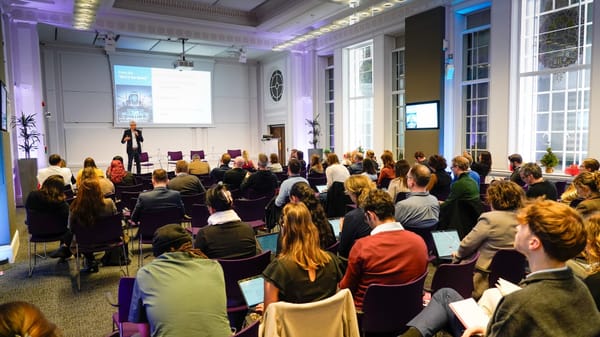
This was just some of the advice shared by Christian Payne, also also known online as @Documentally , at a recent multimedia storytelling workshop in Brighton.
"If you're in a position to capture multimedia, you're going to be able to capture a story which is going to be more palatable to different ears or different eyes," he explained.
Payne, a photographer and documentary filmmaker who specialises in telling stories using a range of media formats, also talked to Journalism.co.uk about the contents of his own kitbag, which you can explore further in this interactive feature on essential apps and tools for mobile and multimedia storytelling. Here are his tips for recording professional-quality audio,video and images.
6 tips for successful online audio
Audio can be much more immersive than video, said Payne, as without visuals the listener has to rely on their own imagination.
Methods such as recording background noise to add context to an audio interview can help the listener to fully immerse themselves in the medium, he said.
Unlike online video, where content is often condensed into a few minutes, audio offers much more scope for creating a longer project, said Payne, who believes that the optimum time for a podcast is between 15 and 20 minutes.
This is because audio is a "multitasking media", he explained. Unlike video, people can listen to podcasts and other audio files during their daily commute or while they do housework.
"
When thinking about what platform might be best for your project, Payne noted that audio is "much less intrusive" than video for interviews, because most people are likely to feel more comfortable simply speaking into a microphone than knowing they are being filmed.
This is where audio has the advantage over video for slightly nervous interviewees, or where the light may not be ideal for good-quality video.
Smaller file sizes take less time to download, meaning more people are likely to listen to them, Payne said.
Recording audio well is a "hidden skill", said Payne. Even in video, he believes the most important part of the package is the audio, adding that people are more likely to tolerate shaky camera footage over poor sound quality.
For recording and editing audio Payne likes the Hokusai iPhone app, and Audioboo for publishing and sharing content. He also has a "secret weapon" for cutting down on any background noise. "Use a mic shield," he said.
6 tips for successful online video
If you don't grab the viewer's attention in the first five seconds they are likely to stop watching, said Payne.
He recommends having something especially interesting, educational or funny right at the beginning of your video as a hook for the viewer.
“The internet is a big place, that person has a lot of other things to look at,” he added.
Engaging video tells a story and has a "reveal" at the end, said Payne, even if it is just a caption with a link for viewers to visit a website for more information. "That way, if the viewer wants more, you're giving it to them."
Another bugbear for people watching video is when it takes too long to load, which can be very off-putting – especially if the viewer also has to sit through an advert before watching the content.
Video content does not have to be perfect, said Payne. However, two things he advised when shooting video is not to use zoom – “it will make people feel sick” – and to always keep the camera steady.
“Run and gun [shooting video while on the move] is ok,” he said, “but it it needs a focal point.”
People generally have less time to dedicate to watching online video than they do for listening to audio, said Payne, so it is important to keep your video content short and to the point to reflect this.
“Three minutes is a long time when it comes to video,” said Payne.
Audio “is vital” when it comes to video, said Payne.
“If you can hear what's going on you can pick up the dialogue clearly and the images can be a bit shoddy.”