Judges order document release to Guardian in landmark ruling
Journalist who requested documents calls decision by three senior judges a 'groundbreaking ruling'

– 2 min read


Journalist who requested documents calls decision by three senior judges a 'groundbreaking ruling'
This article was migrated from an old version of our website in 2025. As a result, it might have some low-quality images or non-functioning links - if there's any issues you'd like to see fixed, get in touch with us at info@journalism.co.uk.
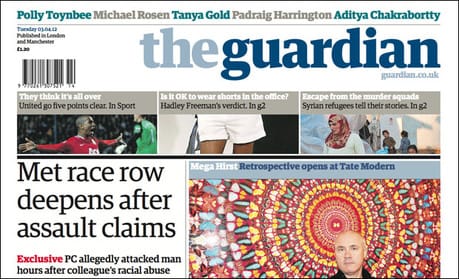
Three senior judges have ordered the release of documents requested by the Guardian in relation to extradition hearings.
The US government and a City of Westminster magistrate had opposed the release of the files used to in justifying the extradition of two British men to the US.
Lord Justice Toulson, Lord Neuberger, the master of the rolls, and Lord Justice Hooper, an appeal judge, ordered the release at the Court of Appeal in London today. Writing in the Guardian, Rob Evans , the journalist who covered the case, called it a "groundbreaking ruling", saying it "strengthens media's right to see documents used in criminal proceedings".
After being extradited following the five-day hearings in 2009 and 2010, Britons Jeffrey Tesler, a London based solicitor, and Wojciech Chodan, a former executive of MW Kellogg, pleaded guilty to taking part in the "bribery of Nigerian officials by Kellogg Brown and Root (KBR), a subsidiary of the well known US company Halliburton".
The Guardian had requested files including "opening notes and skeleton arguments submitted on behalf of the US Government ... and those relating to the defendants", affidavits, correspondence between the Serious Fraud Office (SFO) and the US Department of Justice and certain letters between the the Britons' lawyers.
The Guardian's application for the release of the documents had been turned down by a judge on 20 April 2010.
In its application for judicial review, Guardian journalist Rob Evans, who had covered the extradition hearing, argued that it was impractical for journalists to attend for all five days of the trial and "it is normal for reporters to attend only parts of trials".
He said "obstacles" should not be put in front of reporters.
"The justice system, which is supposed to be open for all to see, should assist the media by providing key documents to them once they have been aired in court."
Lord Justice Toulson summarised the four main counter-arguments to the document release:
"The open justice principle is satisfied if the proceedings are held in public and reporting of the proceedings is permitted; that to allow the Guardian’s application would be to go further than the courts have considered necessary in the past; that in the present case the issues raised in the extradition proceedings were ventilated very fully in open court, and there is no need for the press to have access to the documents which they seek for the purpose of reporting the proceedings; and that to allow the application would create a precedent which would give rise to serious practical problems."
He concluded that "the Guardian has a serious journalistic purpose in seeking access to the documents".
"It wants to be able to refer to them for the purpose of stimulating informed debate about the way in which the justice system deals with suspected international corruption and the system for extradition of British subjects to the USA."
He went on to conclude: "For those reasons I would allow this appeal and direct that the Guardian should be allowed access to the documents which it seeks."
Alan Rusbridger, editor-in-chief of Guardian News & Media, said: "This is a very significant judgment in favour of open justice and should greatly strengthen the hand of journalists in being able to see documents used in criminal cases."