Between the covers: women's magazines through history
The Women's Library's Nell Frizzell gives us an insight into a new exhibition
– 3 min read


The Women's Library's Nell Frizzell gives us an insight into a new exhibition
This article was migrated from an old version of our website in 2025. As a result, it might have some low-quality images or non-functioning links - if there's any issues you'd like to see fixed, get in touch with us at info@journalism.co.uk.
There used to be something here that couldn't be migrated - please contact us at info@journalism.co.uk if you'd like to see this updated!
Oscar Wilde loved them ; the Second World War didn't even get in the way ; and an estimated 60 per cent of modern British women read them: women's magazines are almost as significant in the history of journalism as the printing presses on which they are produced.
That is what an exhibition at the Women's Library in Whitechapel, London, is celebrating with its new exhibition 'Between the Covers: Women's Magazines and their Readers' last week , due to run until the end of April 2009 (view slide show below).
  
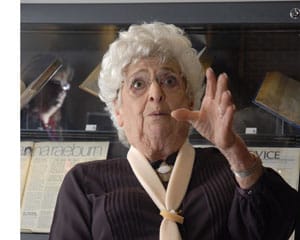
Claire Rayner - known to many of us as 'The Condom Lady' for her tireless campaigning for safe and responsible sex education - opened a private viewing at the Women's Library on October 29, with a quick look back on a career that has spanned over 40 years of magazine editorial.
"I was the first to write about the need for fibre in the diet, after interviewing the doctor who talked about the importance of roughage, or what he called 'smoothage,'" joked Rayner, who was herself a practising nurse before embarking on a career in magazines.
Rayner, like so many other journalists of the women's press, used magazines to educate, inform and inspire their readers on matters of health, style, wellbeing, employment, love and relationships, earning her an OBE in 1996 for 'services to women's issues and health issues'.
Perhaps aptly, she spoke with a cabinet of agony aunt pages and reader's letters behind her; at one point in her career, Rayner received over 1,000 letters a week from women across Great Britain - and duly read and replied to each, often slipping a free condom into the envelope.
Featuring over 130 magazines and affiliated objects, the exhibition is a snapshot through magazine history: from the 1728 almanac The Ladies Diary, which included a compendium of puzzles as well as advice on everything from pastry to perfumes, to the feminist titles of the 1970s such as Spare Rib , right up to modern 'real life' magazines like Take A Break .
In a specially commissioned film by Annis Joslin, contemporary magazine readers talk about their personal relationship with women's magazines.
Huge photographic portraits of several female contemporaries are displayed, among them Spare Rib's Sue O'Sullivan, Katherine Whitehorn of the Observer and Saga, former editor of Cosmopolitan Linda Kelsey, Good Housekeeping's Louise Chunn and Ashanti Omkar, editor of the Asian women's magazine Henna.
What this exhibition aims to illustrate – through the objects, the displays and the timeline printed across the wall – is the extent to which women's magazines have shaped, and been shaped by, the changing experience of women as readers and producers over the last four centuries.
From aristocratic almanacs to cheap and cheerful gossip mags, the history of women's journalism and women's magazines is as fascinating as it is diverse.
, Tel: 020 7320 2222. Nell Frizzell is a freelance writer and an assistant at the library.