Could the news industry pool mental health support like it does with its camera crews?
Psychotherapist and Sky News freelance producer James Scurry invites you to be part of an industry-wide intervention to break the cycle of trauma in the news
A one-minute read, every weekday. Unsubscribe anytime.
No spam. Unsubscribe anytime.
There‘a an expression I've been using a lot lately in meetings with news leaders as the MediaStrong news initiative grows in size and ambition: 'A rising tide lifts all boats.’
Time and time again, I've seen how collaboration allows us to do our greatest work. I've organised sessions with industry peers to discuss hostile environment deployments and big set-piece events like Royal Weddings.
MediaStrong was conceived in 2023 by journalist Leona O’Neill, who developed post-traumatic stress after witnessing the murder of a fellow journalist. The initiative has been laser-focused on helping the news industry develop tailored trauma support for journalists, namely through our annual flagship conference.
As we approach our next event on 13 July, I have been reflecting a lot on what I hear from newsroom colleagues – and especially seasoned foreign correspondents returning from places like Rwanda and, more recently Ukraine. The stories we recount in the therapy room are enough to turn your average therapist as white as a ghost. It's clear that during the course of our careers, many of us will need specialised trauma support from professionals.
I am myself a psychotherapist working predominantly with clients presenting with post-traumatic stress and complex trauma. At the MediaStrong symposiums over the years, we've heard from those at the top of their game, journalists like the BBC’s Jeremy Bowen and CNN’s Clarissa Ward, of the unavoidable mental toll this work takes on us.

"I wish I had been told when I first went out in the field that it doesn’t matter how strong you are, how resilient you are, how loved you are, how good your mental health is, doing this work has an impact, and you will absolutely feel the full force of that impact at some point in your career," Ward said on this year’s MediaStrong podcast.
Take a moment to recognise that's a world-class war correspondent speaking. It's not lost on me that what I see and hear in the edit suite at work wouldn't feel out of place in a psychotherapy session with one of my clients. And while I have mandatory monthly supervision to empty out my 'trauma cup' in my psychotherapy work, no such preventive provision exists to decompress after a tough editing session in the newsroom.

As I come up for the odd breath of air between stories, I've begun to realise that amongst my colleagues the prevalence of undiagnosed post-traumatic stress is a lot worse than we realise.
The key word we all need to focus on is 'preventative'. At MediaStrong we’ve never had a news organisation say no to being involved in the symposium. And while many of the employee assistance programmes (phone lines for journalists to call and therapists who can help) are doing great work, we need to go further. What are we doing to ensure that journalists don’t become traumatised in the first place? I use the analogy that we're all firefighters who have not yet learned to backburn, and yet we wonder why we're constantly trying to put out mental health fires.
There's also a strong economic argument for not letting these fires take hold. Research from Deloitte found that every £1 spent on mental health initiatives saves between £4.70 and £5.
I want you to think back to my adage that a 'rising tide lifts all boats'. Our whole team at MediaStrong (which includes Kristian Porter, the chief executive of the Public Media Alliance), believe that as budgets get tighter and competition with big tech and content creators gets stronger, the news industry must come together.
If the news industry is going to once and for all look after its mental health, we need an industry-wide intervention. I think there's a strong case for beginning to pool mental health support in the same way we pool camera crews. That's the case we'll be making at our upcoming exclusive event and I invite you to be part of this movement.
It's short-sighted to compete on mental health. I made this point at a meeting with Australian news leaders earlier this year: a traumatised journalist with one news organisation may soon take a job at another - which then foots the bill for their time off and their trauma therapy. We know journalists and news professionals move around networks and many - like myself - are career freelancers working for a few at the same time.
The John Schofield Trust has shown us the power of inter-newsroom collaboration over three decades by pairing up journalists from competing networks and providing mentors for early-career journalists. Imagine what we as an industry could do to support one another if we all got behind a single collective, preventative trauma-support initiative.
Media industry wellbeing teams in Australia showed me some pretty alarming research, describing how if trauma exists in a workplace or workforce, regardless of whether it’s the most prevalent psychosocial hazard, it automatically becomes the highest safety priority because of the level of risk it carries and the harm it causes.
Workplace legislation in Australia has also shifted, mandating that employers go to greater lengths to provide psychological safety for their employees. A landmark court case in Australia in 2019 led to a journalist who'd repeatedly asked to be taken off Melbourne’s gangland wars, being awarded $180,000 for psychological injury when her boss asked her to keep going.
My colleagues cast the need for cross-news industry collaboration in a helpful light:
“We cannot continue to treat psychological injury in this trauma-facing profession as inevitable. We must accept that caring for those who bear witness is not just the right thing to do - it is essential to the future of journalism” - MediaStrong founder, Leona O’Neill

“Quality journalism underpins informed democracy and a healthy society. But as the environment in which journalists operate becomes more febrile, are newsrooms equipped and able to equip themselves with the necessary tools to protect their teams from harm, and enable them to fulfil this crucial role?” - MediaStrong co-host, Kristian Porter
We hope to answer that question in detail at the MediaStrong Symposium on 13 July at City St George’s University. Join us to continue the discussion.
Tickets are free for anyone working in the news industry. This year’s keynote speakers include: BBC Radio 4 presenter Caroline Wyatt and former Sky News and BBC correspondent Robert Nisbet. You can register now.
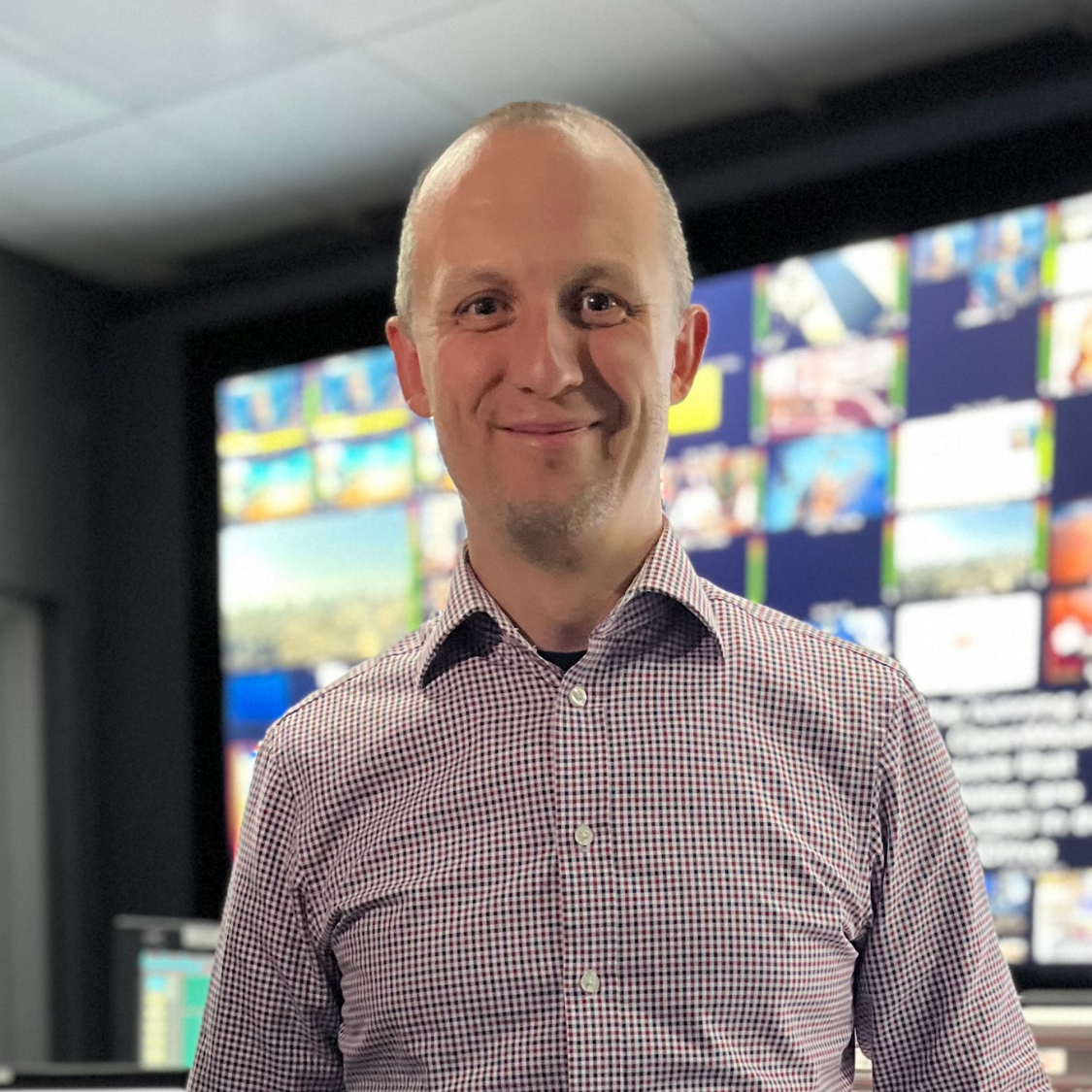
James Scurry is a psychotherapist & co-founder of the non-profit Safely Held Spaces which provides trauma-informed journalism training programmes to newsrooms. He also continues to work as a freelance senior producer for Sky News.