DNR 2026: Five key takeaways for UK news publishers
Here is how to tinker your newsroom strategy as Brits continue to be distrustful of news, unlikely to pay, but still value high-quality journalism

– 4 min read


Here is how to tinker your newsroom strategy as Brits continue to be distrustful of news, unlikely to pay, but still value high-quality journalism

Every year, the Reuters Institute’s Digital News Report provides a vital snapshot of the forces reshaping the global news industry, technological advancements and audience habits.
The latest 2026 edition offers some key insights for news publishers in the UK. Here, we distil the most important findings.

For the first time, online video networks have overtaken both TV and news websites/apps as the main source of news for UK audiences. Though on a global level, this is happening less and less on news-owned websites and apps (11 percentage point fall since 2021)
The UK joins 44 other markets where online video has overtaken TV, though many other markets are considerably more pronounced for weekly online news use, including Ireland (74 per cent), Australia (73 per cent) and the USA (70 per cent),
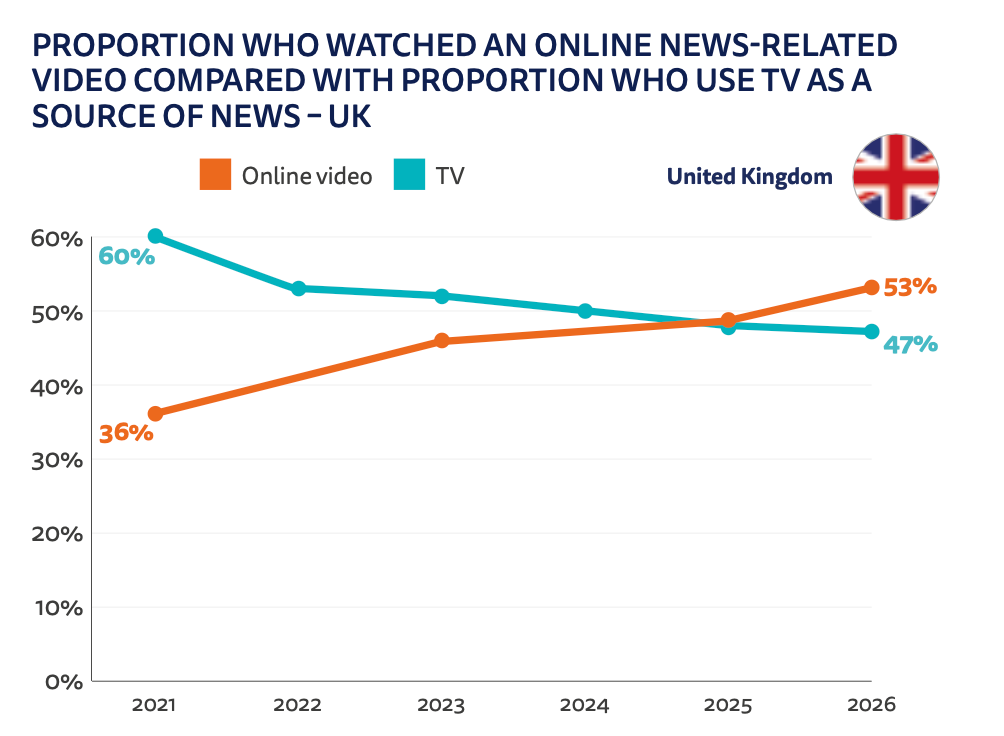
This mirrors the global trend, with 54 per cent of people worldwide now using social/video platforms for news. In the UK, this shift is especially visible among under-35s, who overwhelmingly prefer these platforms over traditional sources.
Facebook maintains top spot for news use (21 per cent) with the biggest increase from last year (+4 percentage points). X is once again in decline (-2 percentage points to 10 per cent news use). It raises big questions about social media strategy for publishers as the UK government introduces a social media ban for under-16s, anticipated for early 2027.
Trust in news in the UK has dropped by 5 percentage points to just 30 per cent — well below the global average of 37 – while individual public broadcasters continue to lead the pack in terms of trust ratings, including the BBC (59 per cent), ITV (57 per cent, and Channel 4 (57 per cent).
The overall downward trend reflects broader societal unease and political turbulence, and with the BBC still maintaining top spot, despite a string of recent controversies and news executives stepping down.
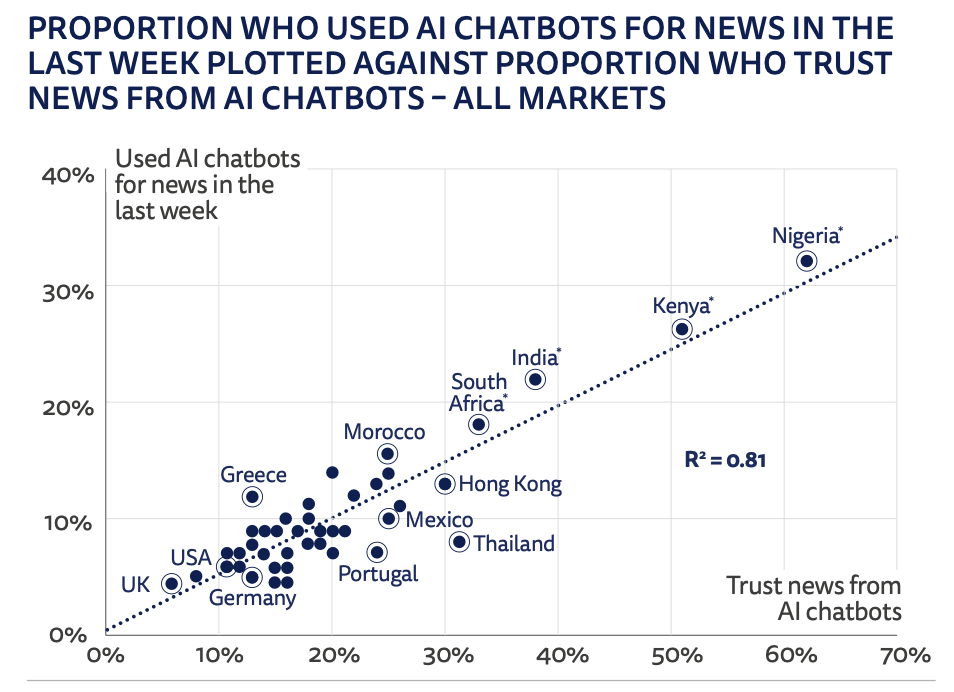
Trust in news is still significantly higher than trust in news results from AI chatbots, which stands at just six per cent in the UK (compared to 20 per cent globally), as just four per cent of Britons say they use AI chatbots for news weekly.