This article was migrated from an old version of our website in 2025. As a result, it might have some low-quality images or non-functioning links - if there's any issues you'd like to see fixed, get in touch with us at info@journalism.co.uk.
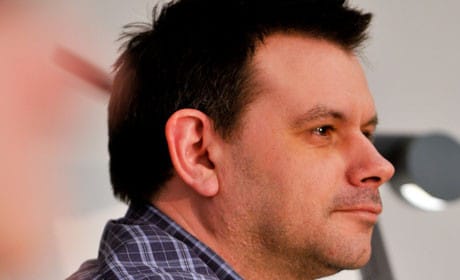
Martin Belam, well-known blogger and user experience lead at the
Guardian, announced in April that he is leaving the news outlet.
After working for the BBC and Guardian Belam is now setting up
his own consultancy . He explains why.
Q. Why are you leaving the Guardian?
A.
By the time I leave I'll have been at the
Guardian for nearly three-and-a-half years, which feels like a good
innings. When I joined it was the first time they'd had someone in
this kind of user experience and information architect role - not
purely technical, not purely editorial, not purely a visual
designer.
I think in the time I've been there it has created a space for user
experience work to happen on a range of products - really thinking
a lot more about user journeys and flows, and solving problems for
the user rather than simply "publishing pages on the internet". And
the business has changed over that time. When we were building the
first version of the iPhone app and the product manager and I were
having to fund bringing people in to test the app in person by
forking out for iTunes vouchers from our own pocket. Now we've got
someone in a user experience researcher role who has joined the
Guardian's strong market research team doing face-to-face and
remote testing of two products a week.
I've had the chance to work on some really good products and
services too. The Facebook social reader app , and working with
Facebook, has been fascinating. I also really enjoyed working on
our local blogging experiment , although ultimately
it was a project that couldn't be sustained financially. I'm really
proud of having got a 'beta' area of the site built, with the
ability to try some more experimental technologies and get real
user feedback on them. The tech team at the Guardian is incredibly
talented, and I'm happy that they've got more of an outlet now to
show some of their work.
It feels like a good time to move on though. I was at the BBC for
five years, and when I left I really felt that had been too long to
stay in one organisation, and so I said to myself I didn't want to
stay anywhere else that long again. Looking at the plans that the
Guardian has coming up digitally, I felt like either this was a
natural break-point, or that I was going to need to commit to
another eighteen months at Kings Place. And there are just too many
other interesting things going on in the internet industry to stay
in one place for long
Q. Give us an insider's perspective. What is the future of
the Guardian?
A.
I think anybody who works with news
organisations has to be really concerned about the future of all of
them. I remember a conversation with [national editor of the
Guardian] Dan Roberts at the Guardian about how quickly the
economics of print distribution unravels if even one of the
nationals reduces the number of days they print or the ambition to
be completely national.
You see stories like the financial situation of the NUJ, the
upheaval at Trinity Mirror, and the stream of newspapers going from
daily to weekly and you have to be concerned. Where the Guardian
has been fortunate is that it has managed to attract a great deal
of digital journalistic talent in the shape of people like Hannah
Waldram, Mary Hamilton, Josh Halliday, Hannah Freeman and Jo Geary.
I really hope they have opportunity to flourish there.
I've still got a vested interest in the future of the Guardian,
because I am not severing ties completely. I've started writing
regularly for the Media Network , and I've got some ebook projects
lined up where I'm editing and writing titles for the Guardian
Shorts range.
Q. So what are you going to be doing next?
A.
I'm setting up my own consultancy called Emblem .
We're going to have a focus on media and publishing, obviously, but
also working with the arts, culture and heritage sectors.
I'm really interested in being able to help large organisations get
to grips with digital, but I also want the opportunity to give some
of my experience to smaller newer ventures. I've spent most of the
last 12 years or so working in the digital bubble on the side of a
business that mostly thinks it does something else - whether that
was TV at the BBC, a newspaper at the Guardian, or hardware at Sony
- and so it will make a nice change of pace to work on purely
digital things.
I already have a couple of clients on board, including start-ups
and a publisher, and I'm looking forward to getting started. In
fact my first post-Guardian work is the very day after I finish,
when I'll be talking at "Journalism 4G" in Bournemouth.
Q. You will also be leading some training courses for
Journalism.co.uk. Why do you think it's important to share your
knowledge of Kindle publishing and better blogging?
A.
Kindle publishing intrigues me. If you are
looking for areas where there will be revenue growth for
publishers, then ebooks stands out as one of them. However, there
has also been a levelling of the playing field as it is much easier
for people to publish. The trouble with that, of course, is that a
proliferation of content means that discovery becomes hard.
On the course you'll learn everything you need to know about
publishing your own title on a Kindle, how to format it, how to
test it, some tips on proof-reading, and how to get it found too.
I've written, edited and published ebooks both by myself and for
the Guardian, so I'm coming from an experienced position.
I think that blogging has matured - whereas it used to just be a
word that described a publishing technology, I now think it is more
like a "genre" or "tone" of publishing. There are still plenty of
businesses and organisations getting to grips with the basics
though - how do you keep a blog living, generate conversations, and
keep people coming back to it.
I think discovering the right voice and the right rhythm for your
blog is vital, and so the course looks at some of those aspects.
We'll also be looking a bit at some of the problems and difficult
voices you might encounter - I've been running my blog for just
under ten years now, and we have an entertaining exercise based on
some of the worst comments and emails I've received over the years.
I hope it will be a really fun evening for the attendees as well as
a learning one.
And always I say to people when they come to a training course I'm
running, it isn't just the course. Part of the deal is that I'm
available afterwards to help people with advice. There are a couple
of people who were on the blogging courses I ran three years ago
who I'm still in regular contact with.