Redundancy resilience: How to bounce back from losing your job
Ex-BBC exec David Thomas was made redundant twice and spent another 20 years coaching those going through the same pain: "Don't worry about having a master plan"
Redundancy sucks. It's stressful and painful to go through. It causes anxiety and panic. It disrupts your routines and creates uncertainty.
But as they say, when one door closes, another one opens. What if being made redundant wasn't the end of the world? We've certainly seen how redundancy has spurred journalists to launch their own independent news titles. For others, it's an opportunity to finally take a punt at self-employment.
That was the case for David Thomas, who spent more than two decades with the BBC, during which time he was made redundant not once, but twice. The first time, his department was closed, so he applied for another job at the broadcaster. The second time, he decided he needed a lasting change.
"I got the message the second time," says Thomas. "I wanted to try to live a different way, just see whether it worked."
He has spent the second half of his career – another two decades – as a career consultant helping media professionals become their own bosses. Part of that learning curve for many is navigating redundancy: what they're likely to experience and how they can adapt.
The emotional toll
The part that most people fail to anticipate is the difficult emotions that redundancy brings.
"People often talk about feeling betrayed," he continues.
"I use the term bereavement because I do meet people who've been employed for decades who feel they've invested emotionally in the place where they work, and they've been let go from that place.
"They feel they've been betrayed, and they go through a grieving process. I think it catches people unaware. That's a hard bit."
People tend to move around more these days, and fewer people spend decades with a single employer, he points out. But the warning is still stark: it's perfectly normal to have strong feelings about being let go.
The identity crisis
There's another uncomfortable realisation for those who are made redundant. We as journalists attach so much of our identity to our profession or workplace. So once that is removed, it leaves us feeling empty.
"It's because of the framing we have in our own heads about who we are," Thomas explains.
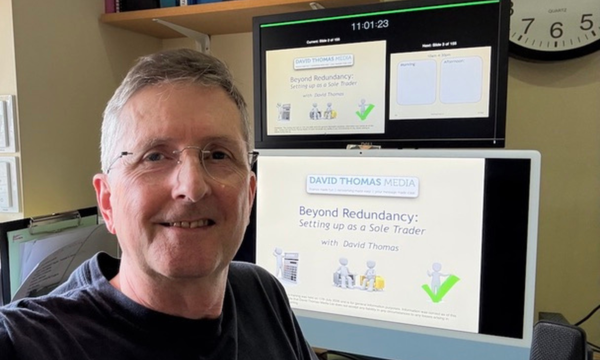
David Thomas delivering a workshop
"It's literally an identity crisis for some people. And I think that's more important to know than almost anything else."
Identity has been a prominent theme in our reporting on career breaks, in that journalists need to wrestle with who they are and what their values are before taking the next step.
Well-intentioned people might take pity on your situation and ask uncomfortable questions about your next move. If – like Thomas – you decide to explore self-employment, you can skirt around the question by simply saying you're starting up a new business.
What can journalists do while they have the security of employment to prepare for redundancy? As a risk-averse person, I'd described this possibility to Thomas as a 'worst-case scenario' or something that needed a 'back-up plan', to which he provided welcome push back:
It's just a different scenario. Because if it were the worst-case scenario, then it would have been a disaster twice in my life.
In a world where you can launch a newsletter and start charging people a subscription fee, this is a key mindset shift that journalists need to embrace if they are to become their own boss. He continues:
"The reason it feels like a worst-case scenario is because it's impossible for people to envisage a different way of earning money."
The two lists
Is it that easy? Of course not.
A worthwhile exercise for anyone is to make two lists:
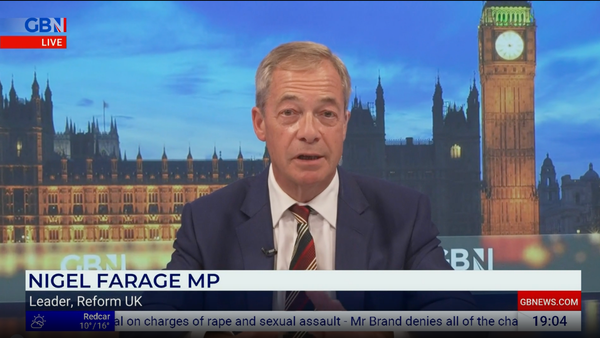
Screenshot: Reform UK's leader Nigel Farage hosting his show on GB News
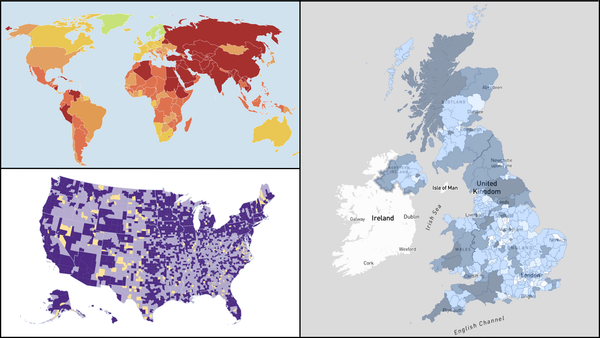
Screenshots of Reporters Without Borders Press Freedom Index (top left), Northwestern Local News Landscape (bottom left) and Public Interest News Foundation Local News Map (right)