This article was migrated from an old version of our website in 2025. As a result, it might have some low-quality images or non-functioning links - if there's any issues you'd like to see fixed, get in touch with us at info@journalism.co.uk.
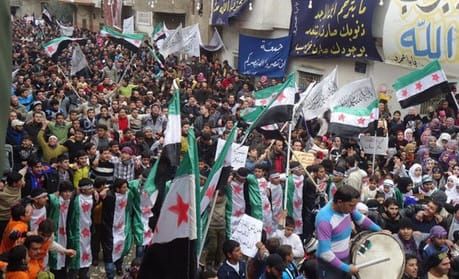
Many of the events occuring in Syria are "disappearing into a black
hole and will continue to do so", the Times defence correspondent
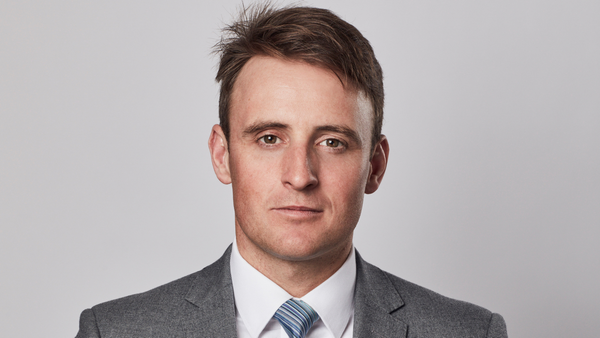
Tom Coghlan warned today, as a panel of journalists discussed
issues facing journalists and citizens trying to cover the
revolutions.
Speaking at the POLIS International Journalism conference at the
London School of Economics, Coghlan compared his experience of
reporting from countries involved in the Arab Spring such as Libya , which he said was "fabulously unrestricted".
"It was very dangerous at times, but fabulously unrestricted
because it was completely chaotic.
"As an experience it was really wonderful," he added, saying it was
a "fantastically optimistic story to cover".
In contrast he said working in Syria , where he reported over a six day period, "was extremely
unpleasant and I think it's possibly a very sad story in contrast
to the Libyan tale."
Coghlan warned that "so much of what is happening is just
disappearing into a black hole and will continue to do so in so
many places".
"There is no doubt this is an unbelievably important time," added.
"The great tectonic plates of history are shifting and grinding
together".
Lindsey Hilsum, international editor of Channel 4 News, spoke about
the issue of becoming "obsessed" with countries where "there's
something bigger and more immediate happening" over others.
"We're all exhausted and we've run out of money because we spent so
much last year covering these revolutions, rightly. The bar for
getting on a trip becomes much higher."
Hilsum gave the example of of Egypt 's situation, which she said is "very complex and very
important", adding "once you start to get into all the complexities
it becomes much harder to convey on television certainly and
something less of mega public interest and more of a niche
audience.
"This is where the BBC does well with the World Service but for a
mainstream news programme, I do worry we don't cover it properly
... That's what we have to try and do."
Coghlan also spoke of experiencing an increase in the bar to
covering stories in dangerous areas, with journalists being told
they cannot travel to such places without a bodyguard.
Similarly Lyse Doucet of the BBC said the obstacles for those "who
want to chart what is happening across this region" are great.
"As a journalist there's been some absolutely amazing moments in
past year" but "Syria is the saddest of all", she said.
Doucet described arriving in the centre of Damascus and seeing in
the eyes of the people that "they were terrified that you'd ask
them a question".
"I stood there as a journalist and I felt nervous and embarrassed
for them. Yet we knew, and they knew, their story had to be
told."
Another day outside of Damascus she described people as being "too
afraid to say they were afraid".
"All we can hope is that because we have such a diversity of media,
with citizen journalism, we can continue to follow these stories as
best we can."
One result of this is that news outlets are receiving footage -
said to be from inside the country - which they must verify.
Hilsum said there are a number of steps outlets are taking, such as
cross-checking weather conditions or details of the person
submitting the footage. The broadcaster is also subscribed to
Storyful "which specialises in trying to verify details", she
added.
She also described how Twitter has been used to crowdsource
verification of footage, adding that journalists must be "extremely
vigilant".
Coghlan added that one "problem" may be that the governments will
"catch up" with these technological developments, and that the
world is "going to see an increasingly sophisticated response to
all of this."