Tool of the week for journalists: Engagio, for managing social via Gmail
Engagio allows you to track conversations you are having on social networks, including Twitter, LinkedIn and Facebook, from your Gmail inbox

– 2 min read


Engagio allows you to track conversations you are having on social networks, including Twitter, LinkedIn and Facebook, from your Gmail inbox

This article was migrated from an old version of our website in 2025. As a result, it might have some low-quality images or non-functioning links - if there's any issues you'd like to see fixed, get in touch with us at info@journalism.co.uk.
Engagio allows you to link your social accounts, including Twitter, Facebook, Google+, YouTube, LinkedIn Tumblr, WordPress and Disqus, and manage the conversations your are having on the various them platforms via your Gmail inbox.
Engagio is a useful way of tracking the conversations you are having on social networks and commenting systems and enables you to manage them all in one place.

If you do not use Gmail or Chrome, you can access the conversations via Engagio , but what makes this a particularly useful tool is the Chrome browser extension which means you can see your conversations within Gmail. Once you add the browser extension, an Engagio logo appears above 'compose' in your Gmail inbox, giving you access to all of your conversations.
You can also post a tweet or post to another network from within your email inbox.
There's a discovery element to Engagio too, as you can track trending conversations, but it is the Gmail-like inbox experience that makes it the most useful.
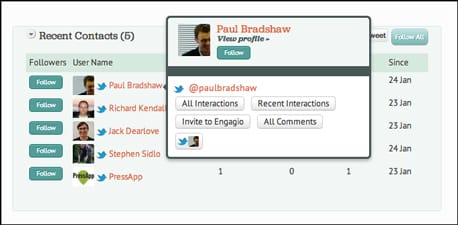
You can click on the name of one of your contacts to see their recent tweets or conversations they are having on social networks. There is also the potential to manage conversations with the same person you are speaking to on different networks.
Engagio, which is still in beta, states on its site that it aims to solve the problem of social media "becoming extremely fragmented", providing a single space to manage your contacts rather than requiring you to use a "multiplicity of touch points".