Expect to work for free for two years, magazine editor tells students
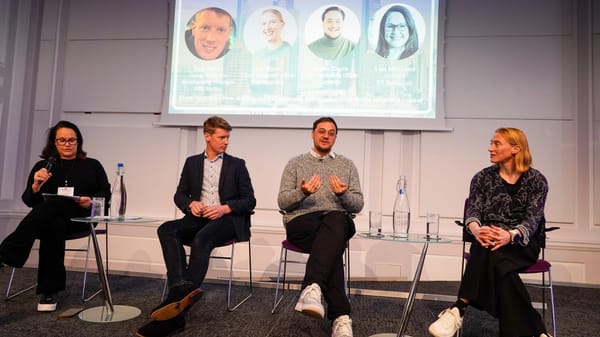
Two speakers offered advice to students at a Women in Journalism event
– 2 min read


Two speakers offered advice to students at a Women in Journalism event
This article was migrated from an old version of our website in 2025. As a result, it might have some low-quality images or non-functioning links - if there's any issues you'd like to see fixed, get in touch with us at info@journalism.co.uk.
Journalists may now be expected to complete up to two years of unpaid work before landing a job, a magazine editor said at a Women in Journalism event on Thursday.
In the current uncertain times, longer internships are the best way to get noticed by an employers, Maureen Rice, editor of Psychologies magazine, told a group of students at the Student Women in Journalism event in Islington, London.
"We massively prefer offering internships rather than work experience placements. They are worth the investment for us and are very much the right way to get a first job, especially in magazines," Rice added.
Rice acknowledged that student might consider going into public relations, rather than journalism: "I can understand completely why people would do this," she said.
"It's not going to be easy in the near future but you must demonstrate how you have kept your interest in journalism alive. Keeping an up-to-date blog would be a good idea."
Enthusiasm was one of the most appealing qualities to have as an applicant, said Sue Matthias, deputy and managing editor of New Statesman magazine.
"A lot is down to the intern themselves - they must have a lot of energy," Matthias said. "You notice the kind of person that will go around the room and ask people if they need anything doing and ask where to take their ideas to."
"Interns should act as though they are just as excited to make someone a cup of tea as they are to write a feature," Rice added.
Both speakers agreed that applicants were more appealing when they knew exactly they wanted to achieve from an internship. Rice also advised to ask in advance if there is any 'pitching' etiquette at the publication.
"You don't want to bug anyone, so take the temperature of the moment and read the room. You can usually judge whether it's an appropriate time. The best thing to do is to ask for a schedule via email before your placement begins."
Both Rice and Matthias agreed that they preferred applications by email as opposed to letter, and advised to phone the publication in advance to get the correct names and spellings of the recipients.
Emails could be sent to the person in charge of work experience as well as the head of the desired section, Rice said.
Both editors agreed that having a personal blog was a good idea. "I have often looked at links to applicants' blogs. It’s more powerful than you may think to include a website address," Rice said.