How do we improve how women are treated inside and outside the newsroom?
Misogyny, #MeToo stories and gender-specific abuse have affected the news industry this year. When women pushing for better standards are getting burned out, we need men to stand up for change
This article was migrated from an old version of our website in 2025. As a result, it might have some low-quality images or non-functioning links - if there's any issues you'd like to see fixed, get in touch with us at info@journalism.co.uk.
Can you really blame women for not wanting to stick around or enter the news industry? 2023 has had its fair share of low moments for women in news.
Women journalists continue to face torrents of abuse both on- and offline. New data reveals a quarter of UK women journalists have experienced sexual harassment or sexual violence in connection to their work. Three quarters have faced threats to their safety and a fifth considered leaving the industry altogether.
The New York Times (NYT) also reported how The Financial Times killed a #MeToo scoop based on seven women's complaints against former Observer columnist Nick Cohen, who resigned in 2022.
This is just a snapshot of the reality for women journalists: many do not feel safe inside or outside of the newsroom.
Sexual abuse and harassment is an ever-present concern that is difficult to talk about, not just within newsrooms. Women are also reluctant to rock the boat because it is so hard to break into journalism.
There is also a genuine fear that blowing the whistle would lead to them gaining a reputation for being a troublemaker or an HR problem.
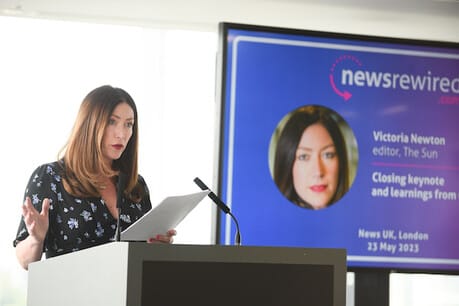
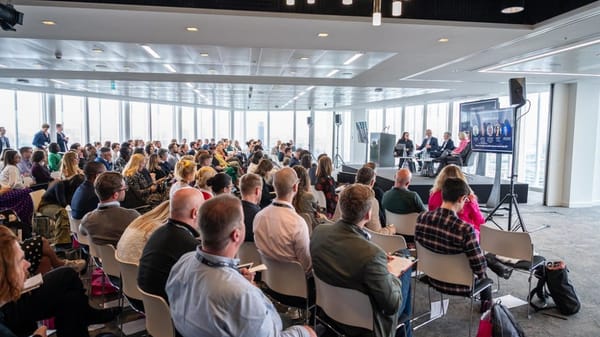
The Sun's editor-in-chief Victoria Newton spoke at our last Newsrewired conference about wanting to support her women colleagues better and to make better editorial judgments at the male-centric newspaper - like a headline for the Matt Hancock scoop in 2021 that did not resort to "puns and sex jokes".
Elsewhere, Rozina Breen - a former BBC senior leader for more than a decade - took up the post of CEO and editor-in-chief of the non-profit The Bureau of Investigative Journalism.
Being a woman of colour from a working-class family, Breen told us on our podcast that taking on the role came with 'compounded otherness'. Being a news leader means you can be seen as separate from the team, with the added pressure of bearing the expectations of all senior women and women of colour.
'Lifting as you climb' is a mantra Breen takes seriously, meaning to take women up the career ladder with her. That is also practised by Catherine Salmon, who this year became the first woman editor in the history of The Herald, a 239-year-old newspaper in Scotland, bringing three new, award-winning women columnists in with her.
"I wouldn't have the job if not for covid," she says on our podcast. Hybrid working has become the norm and that has benefitted women - as well as men - enormously.
"I have seen hugely talented women journalists and desk heads having to step aside because there wasn’t flexibility. That is changing; I have felt and seen the change. In some ways, I am the change."
Mother-of-three Salmon says she is "flying the flag for worn-out mothers" and accepts that her appointment is also a big deal for young women with aspirations to reach the top.
Burnout setting in
Diversity matters because it raises new perspectives, questions and objections. However, diversity alone will not fix the issue, says Luba Kassova, an independent audience strategy consultant, and the author of the report From Outrage to Opportunity: the Missing Perspectives of Women in News.
Her research finds that even when women reach positions of leadership they continue to face sidelining, she tells us on our podcast. This could include being informed about decisions after the fact or dismissing stories that matter to them.
Gender-focused topics - sexual violence, reproductive health, gender equality, discrimination - are often seen as "soft" and "solved" in the aftermath of the #MeToo movement. They also account for a tiny fraction (0.02 per cent) of global news coverage, despite some high-profile examples of these topics rising to the top of the news agenda during the pandemic.
Usually, it is women pushing for these stories - and better standards of reporting on them - time and again, leading to them getting seriously burnt out when change is not happening.
The same is true for those leading diversity, equality and inclusion (DEI) initiatives, which are usually left to women - and women of colour - to head up. It can be a lonely and exhausting experience.
"You’re asking the disadvantaged person to resolve the problem of their own under-representation at great cost to their own careers because DEI initiatives have been shown to impede on people’s opportunity to be promoted in the news. So that’s another unfairness," explains Kassova.
Men as part of the solution
Where do we go from here? A familiar refrain comes from Kassova: "We are exceptionally good in journalism at holding others to account, but are less ready to do so when it comes to ourselves."
That is not to say that allies are ineffective. News organisations just need influential people from over-represented demographics - usually white men - to be champions for change, as well. That means being made accountable for diversity and representation efforts, standards of reporting and conditions in the workplace.